

How A Washing Machine Works
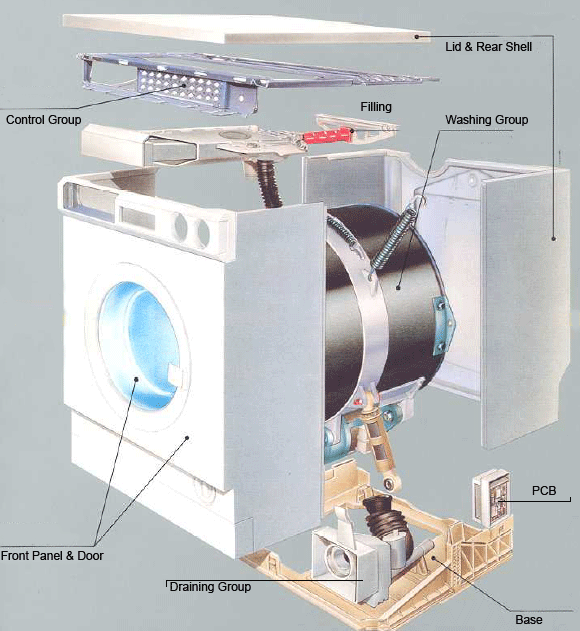
This diagram shows the basic layout of a washing machine, in this case a Zanussi “Nexus” range machine but the basic principals are more or less the same with most washers.
To be fair, the actual style of washer matters little as the process remains basically the same across the range. Consider the objectives.
Filling The Washing Washing Machine
Fill and add detergent to a pre-determined level. This will be achieved (after the door has locked) by jetting water through a soap drawer; either by multiple inlet valves or a steering mechanism to direct water appropriately. The water level is controlled by air being displaced from a catchment bell and forced up a tube into a diaphragm switch. The initial fill is the “critical mass”, which will allow the heater to operate. On older purely electro-mechanical machines, this will generally initiate drum action and heat. Newer “digital” machines may well tumble as part of the fill sequence, allowing the water to be absorbed into the wash load. Older machines will start to tumble and then “top up” as water is absorbed. Bear in mind that a 10lb dry load will weigh 60lbs by the time it is fully soaked!
Heating The Water
The machine must heat to the selected temperature of the programme. This will be achieved by operating an internal heater, in conjunction with some form of temperature control. This may be by multiple fixed bi-metallic thermostats; a thermistor (or variable resistance sensor) coupled to a digital printed circuit board or a variable gas capillary thermostat. Most of these devices will hold the programme at a fixed point until wash temperature is achieved. Some older appliances do this by “static heat”; ie. the machine stops until wash heat is met. The exception to this is the American style machines, which are not fitted with a heater and rely on balancing hot and cold fill to achieve temperature.
The Wash Action
The machine must tumble the clothes for a reasonable length of time in order to knock the dirt out of the clothes. It really is only one step on from slapping the clothes on a rock by the river! For this reason stuffing the machine to bursting point causes poor wash results; the clothes can’t move freely and knock the dirt out.
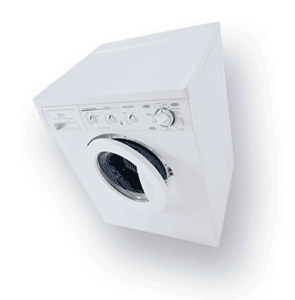 This article will deal with automatic washing machines, which comprise of three varieties:
- The vertical top loader, Hotpoint and “American” style machines.
- The horizontal top loader – “Slimline” Whirlpool and Bosch/Siemens machines
- The front loader – just about 99% of the UK/European market.
Rinse The Washing
The wash does not get your clothes clean, all it does is loosen everything up. The rinses get the laundry clean, by washing the loosened dirt and wash agent away. Generally there are 3 or 4 rinses, often at a higher water level. This may be by a higher setting on the water level control, or by a timing system related to the fill time on digital machines. The extra water will slow down the movement of the laundry, treating it more gently as well as soaking it more deeply.
Spinning The Clothes
To spin, the machine must empty the “free water” from the drum first, this will depressurize the water level system and allow spinning to commence. Bear in mind that there will be a second release of water from the clothes as the machine picks up speed; to this end if your machine has a filter it MUST be kept clean, otherwise the water will seek other ways out! This regularly leads to leaks from soap drawers and bearing failures.
A common misconception is that higher speeds give dryer clothes. Whilst speed is important, duration is also relevant. A 1000rpm machine spinning for six minutes may well extract more water than a supposed 1200rpm machine, which will generally spin at 800rpm, with a short burst at top speed to finish.
That’s how it does it. This is a guide to function, not failure; it may give you some pointers as to what may be amiss with your appliance, but beyond basic faults, get professional help.
If you’e determined to have a go, PULL OUT THE PLUG FIRST!
on some of my wash cycles an error 7 comes up when the wash has cycle has finished, can anyone tell me what this means. The wash seems fine and the machine is filling and spinning fine
The washing machine is a Meiler Komfort washing machine. The problem is that the washing machine takes in water and when set on spin, the alarm goes off a sign is displayed on the screen saying “technical fault”