

On December 19th 2012 Comet, for a long time the second largest electrical appliance retailer in the UK, closed its doors for the last time ending nearly eighty years of trading on the high street.
Although, Comet was more retail park based in the end, largely confined to the large out of town retail units more than the actual high street, which it seemed to abandon over a decade ago.
Administrators Deloitte failed to sell the business as a going concern despite best efforts and, as a result, the only option was to shutter the business with the loss of an estimated 6500 jobs making the collapse of Comet one of the largest retailer failures in recent times.
The collapse means the UK government is now liable to pay statutory redundancy to staff estimated to be in the region of £24 million.
The current owner of Comet, OpCapita famously bought the Comet business in November of 2011 for a pound along with a £50 million “dowry” from the former owner, Kesa Electricals.
OpCapita has received much criticism from government ministers and the media over the way in which the collapse of Comet was managed and, how it all came about with pundits and ministers calling for a formal inquiry into the collapse. Results of an inquiry by the Insolvency Service are unlikely to be made fully public.
Staff too blame OpCapita and they are bitter about the way that they have been treated in some cases, most likley there will be some justification in that given what we have heard but, the circumstances and who is actually to blame may not be that clear to even the staff directly involved. It is though hugely sad that these people, many of whom have worked for Comet for many years, have been left without a job and treated in the way that they have been. That said, if Comet had simply shut their doors in November of 2011, would it have been any different?

The Blame Game
In modern society there is always someone at fault and, there is no exception in the case of Comet, with OpCapita having the burden placed squarely on its shoulders. Primarily however the blame is being directed to the man that runs OpCapita, Henry Jackson.
It is easy to blame one person or party but, in the case of Comet, is this fair comment? Or, is there a more complex set of circumstances?
We think that it is far more complex than people are generally saying that it is and that the collapse of Comet is indicative of deeper issues within the electrical industry, if not the entire retail sector. The collapse of Comet is merely a symptom of the disease.
It may well turn out to be the case that there are serious questions to be answered by OpCapita, Hayley Acquisitions and Mr Jackson and staff but, in the end, what they did was after all legal. Whether how they treated the Comet business was moral is another debate entirely.
They made the best of a bad fist as, bear in mind, that when OpCapita took Comet onboard it was a “struggling retailer” by all accounts, including it’s owners and outside investors pushing Kesa to dispose of Comet. The reality is, the business was already starting to collapse before OpCapita even got involved. A lot of people may wince at that comment but it is nevertheless a fact.
Perhaps OpCapita did not behave correctly, that may well turn out to be the case but, for the moment, it merely looks as if they made as much from the collapse as they could while protecting their own business. Most other buyers would have most likely have done likewise.
Other buyers however appear to have been put off the idea of buying the Comet business for a number of reasons including the strings that came attached from Kesa. These strings left OpCapita in a position where it was, in some measure, constrained from making cuts that were key to the survival of Comet as a business and, it is our opinion, that this is probably a major factor in why Comet now no longer exists.
Market, Margin & Competition
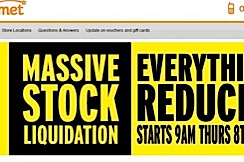 The market for electrical products overall in both brown and white goods has always been tight for all retailers but for “stack ’em high, sell ’em cheap” outlets such as Comet and Currys these can often be squeezed even further.
The general public just do not get this at all, that the £XXX that they spent wasn’t all on the product or that the business that sold the product didn’t magically get paid that amount of money, they only get a small percentage of it. Everyone involved only gets a small percentage, except government, who often get a much larger slice in VAT than anyone involved let alone other taxation.
These sort of retailers rely on volume to drive profitability as well as “add-on” items such as lucrative extended warranties and, when volume dries up, they can find themselves in a tough spot.
When the first round of global financial disasters set in during 2008 and people stopped moving home the appliance market fell dramatically in the UK as people moving is one of the key drivers in major appliance sales. This being a key area for Comet an Currys had a direct effect on the level of sales and, profits.
Meanwhile supermarkets such as Tesco and Asda along with other retailers such as B&Q, Argos, Homebase and others also selling core product ranges in TV, gaming, washing machines, dishwashers, refrigeration and more piling more pressure on.
This compounded yet further by the massive increase in online shopping in the UK putting more strain on traditional retailers by lowering margins to some degree but also by robbing the traditional “high street” channel to market of volume that it needs desperately to survive and attract customers.
At the same time, tax and fuel duties especially (which is vital in a business that delivers to the home and services products in the home) rose. Staff salaries rose. Property costs rose. Credit ratings were cut when the business parted ways with Kesa leading to a massive increase in stocking costs.
With low margins, declining sales and increasing costs the collapse of Comet was most probably inevitable.
And, these are the reasons that Kesa struggled to find a buyer for the business in 2011 as well as why the administrators failed to find a buyer. It was widely reported that part of the deal was that OpCapita were not allowed to shut stores, meaning that they were forced to carry the costs of the staff and premises as well as the stock to put in them after Comet’s credit rating was slashed.
You have to ask, who in their right mind would take that on?
You have a declining market full of customers that are looking for the lowest possible priced goods, a mass of competition both on and offline and massive pressure on margins along with most of the products no longer aspirational to many, merely a commodity with much of it a replacement market only.
It has been commented that anyone taking on such a venture would face, at best, severe adversity to make it work at all but that the chance of success in any measure, would be small.
We therefore are forced to ask, is OpCapita the bad guy that they are being painted as by the media and government or, is it merely convenient to have someone to blame in a sound bite?
Stark Warnings
As we draw closer to the end of the busiest time of the year for most retailers warnings are being issued before the sales are even in full swing that Comet may well not be the only casualty and, we are to expect more in 2013.
Rumours and speculations are rife across many sectors but here in the appliance world, there is enough to cause widespread distrust with a “who’s next” attitude prevailing. So, suppliers across the entire chain rely more and more on credit ratings to gauge the exposure that is allowed.
What the recent industry collapses prove, from Comet through to well known manufacturers like Servis, is that even big businesses are not safe or immune from failure. And, those are only the ones that are visible for what they are, a collapse, what many do not see are those businesses that have some value and are bought because they are in trouble.
There are a plethora of reasons why a business might fail and, generally speaking, the management of these companies are trying to do their best, often under very difficult conditions, for their own purpose but also that of the staff and customers.
It just often is unfair to point the finger of blame at the man at the top when all too often, there was nothing that he or she could have done to improve all the circumstances or, even find a way to survive.
Given the current climate though, we doubt that Comet will be the only collapse we see in the not too distant future.
It is a great shame to see the Comet name disappear but, in the end, it was probably unavoidable regardless of what anyone did.