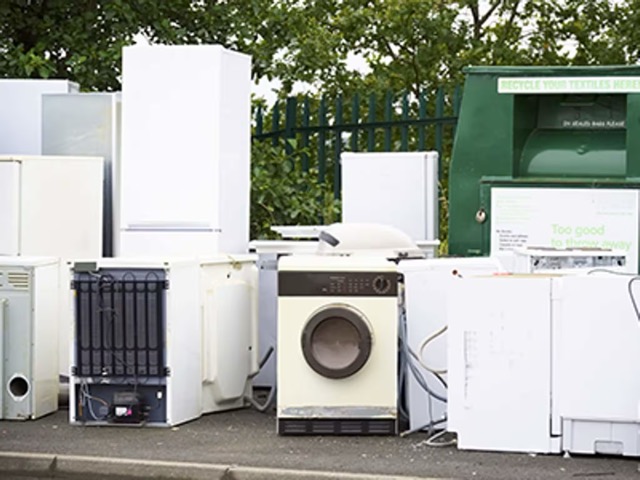

A waste crisis that could dwarf the fridge mountain of two years ago loomed last night.
The scrap metal industry said it would no longer accept the 45,000 cars and tens of thousands of domestic appliances it deals with each week.
For months it has been asking the Environment Agency to decide whether such routine scrap is classed as toxic waste, but without success.
Now, it says, abandoned cars will have to remain on the streets.
The crisis blew up on the day the number of landfill sites licensed to take toxic waste dropped from 200 to 11, with one of the largest failing to open because it had not received word from the agency.
Neil Marshall, the director general of the British Metals Recycling Association, said: “You could not make it up. The whole industry is shutting down. This is going to make the fridge mountain look like Legoland.”
He said steel plants would be hit almost at once; laying off workers and closing almost immediately because of a shortage of raw materials.
Mr Marshall said: “The Environment Agency has known about this for a long time. We thought they would resolve it, but they haven’t. There is so much new legislation at the moment that they haven’t been able to focus on the problem.”
He said two conflicting pieces of legislation were at the heart of the problem; the EU End of Life Vehicles directive, under which shredder residue is classified as “inert”, and the hazardous waste regulations, which require all materials to be tested each time they are sent for landfill.
The recycling industry, formerly called the scrap metal industry, takes cars in at one end and produces sorted raw materials at the other. It recycles between 72 and 75 per cent of a car. The remainder – until yesterday – was sent to landfill.
For months the industry has been asking the Environment Agency for a ruling on whether “shredder residue”, qualifies as an inert waste to be dumped in domestic landfills, or toxic waste that has to be dumped in hazardous waste landfill sites, the capacity of which has just been dramatically reduced.
In addition there is the problem of chronic undercapacity at toxic waste landfill sites from yesterday. The scrap metal industry alone produces 800,000 tons of waste a year.
If this is categorised as toxic, it will have to be landfilled in dumps which, according to Government estimates, have a capacity of 750,000 tons. Mr Marshall says the capacity is only 350,000 tons a year.
“The Government’s answer has been that the market must provide an answer to the capacity problem,” he said. “We are the only fully self-supporting recycling industry, we do it to make money and the Government has just kicked us in the teeth. We are faced with an overload of conflicting legislation.
“The agency, the DTI and Defra need to get together, but this isn’t happening.”
He called on Elliot Morley, the environment minister, who earlier this week claimed the end of landfill was a good thing that would be good for recycling industries, to sort out the mess by granting a derogation to the industry to go on dumping its waste in ordinary landfill sites.
The Department for the Environment, Food and Rural Affairs said: “We have arranged a meeting with the agency on Monday.”
In response, Lady Young, the chief executive of the Environment Agency, published a letter in which she accused the scrap metal industry of being less prepared for the end of landfilling than other industries. She cast doubt on whether it would obtain a ruling that shredder waste was inert.
From The Telegraph