

Appliances In Unheated Areas
This is a bad idea, often a very bad idea and even dangerous! We explain why and how to avoid a visit from the fire brigade
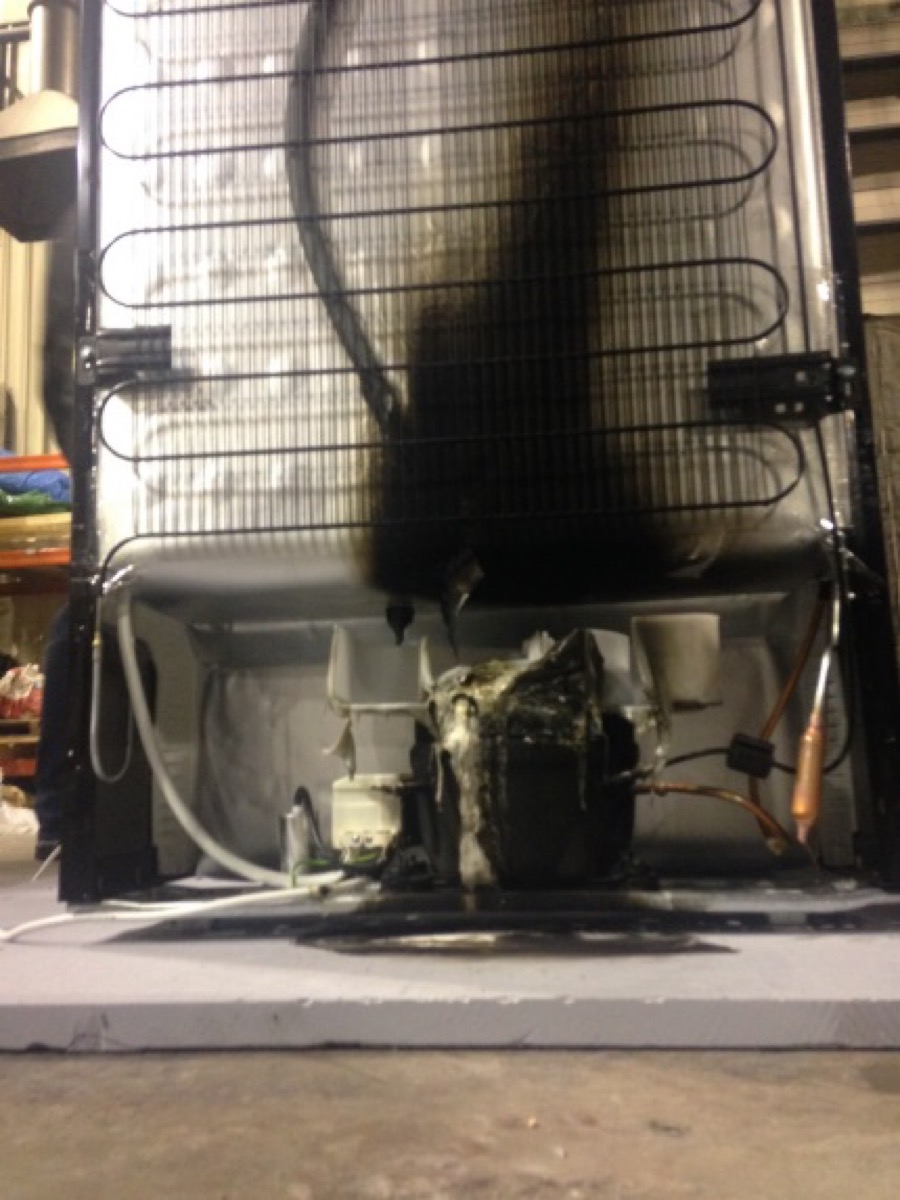 Electrical safety is often overlooked when someone installs a machine in a garage or garden shed. This type of environment is totally unsuitable for most appliances and very often includes fridges, freezers, tumble dryers and washing machines.
The buildings are usually uninsulated, badly ventilated and very often have an inadequate electrical supply that is under-rated and badly earthed. Anyone even considering ‘plugging the freezer in the shed’ would be well advised to contact a local qualified electrician first of all.
Dampness is a real problem to overcome, particularly during the winter months, creating condensation throughout, especially over electrical connections and circuit boards. Electrical supply, therefore, has to include a power safety cut-out device known as a Residual Current Device or RCD. Such devices will immediately react to any fault that would otherwise not be apparent to the user.
The ‘room’ should be well ventilated and insulated from the severe cold and possible rising damp from below. Washing machines and tumble dryers naturally get hot during use, but when they are switched off and left in a damp atmosphere, they quickly draw in the moisture and can be seen dripping with condensation all running down the side of the cabinet!
Low-wattage heaters will help keep the ambient temperature at a safe level to offset the high humidity level. Many such heaters have a ‘frost’ setting that will switch them on when the temperature drops. Bare concrete floors should be covered with a linoleum-type material, especially directly under these appliances to stop rising damp.
It is also very important to keep a clear space around any appliance for good ventilation. Vented tumble dryers fitted with the correct flexible vent hose through a hole in the wall or an open window. Washing machine fill and drain pipework equipped with foam-insulated fittings to prevent freezing is a must.
Not Warm Enough For An Appliance
Probably the single biggest problem in any sort of outbuilding, be it a garage, a shed or pretty much most other outbuildings in the lack of any kind of heating.
Very often, we receive comments which indicate that people generally do not understand why a kitchen appliance will not work in a low ambient (room) temperature. You will often see advice that certain tumble dryer models, condenser ones in particular, will not work in a low temperature environment and the firm favourite for this phenomenon is a fridge freezer.
You can read a lot more about installing a fridge freezer in an outbuilding from this article, which goes into that scenario in more depth.
But tumbler dryers that are meant to condense the water vapour do so by feeding the warm air over a cold condenser unit and, if the condenser unit is too warm then it won’t be cool enough to allow condensation to form and therefore the water to condense and be removed. Conversely, if the internal areas of the cabinet are too cold, water will condense on surfaces that it shouldn’t leading to all sorts of issues.
The general rule of thumb for almost every kitchen appliance is that they must me used at “normal room temperature”. That is to say, between 10°C and 30°C, outside of these temperatures, normal operation cannot be ensured.
Electricity And Water Supply
It often follows that, where an appliance is installed in an outbuilding, the supplies to the machine can be, shall we say, not the best.
It is important to remember that any appliance is designed to be used in domestic premises; it is, after all, labelled as a domestic appliance and not designed to be used in adverse conditions or outside of a normal domestic domicile. That means that extremes of temperatures are not accounted for in the design as well as the supplies not being up to the standard that you would expect in a normal home.
We see this a lot and for more on this subject please see our article on off grid installations.
Best condenser tumble dryer to go in shed
HI Roger
Please could you tell me which tumble dryer you bought and are you still happy with it a few years on?
Thanks