
For many years, there has been a steady rise in interest in making homes smarter. This can be for to several reasons: in fact it can be one, some, or many. It all depends on what the user wants and the goals of it are.
This makes the conversation about smart appliances a bit of a hard one as, different people want different things.
If the goal is to somehow remotely control your appliances, we’d question why you want to do that in many cases, and it seems that manufacturers would also question it, as it doesn’t make much sense.
 After all, you can’t load up a washing machine, dishwasher or tumble dryer remotely and switching one on blindly, not knowing what’s in it etc could be potentially hazardous.
That said, being able to remotely control them in a “smart” way isn’t an entirely stupid idea, with the correct safety rails in place.
If the goal is to monitor the condition of the appliance, that does make sense, but it’s limited in some ways, and the benefits of that are debatable to a degree. There’s no harm in it as such, but there are no immediately obvious benefits, either. Other than, we guess, to see energy use, cycle count, status, notifications and such so data geeks will be happy with that.
This means that if the goal it to monitor and understand use, energy and cycles run etc then yes, we’d see the benefits on a few fronts but it might not have an especially broad appeal. And much of this can be achieved, even for dumb products, using a simple Zigbee or similar smart plug with energy monitoring along with vibration sensors and so on if you want that.
But if the intent is to actively control energy use by perhaps stopping things running at certain times, we’d urge extreme caution. This, done incorrectly on normal dumb products, could cause damage to the appliance that may require either intervention by a repair technician or replacement spare parts, neither of which is good news for owners.
But it is our opinion that, so far, automation implementations in kitchen appliances has been disjointed at best and in our view, very poorly thought out and from what we’ve seen, badly implemented. This might change a little with the introduction of Matter, a new smart home communication standard but we still think that many things haven’t been well thought out.
It is almost as if for most that some corporate body has demanded some sort of “smart”, “connected” appliance platform that has it’s own app because, you gotta have an app to be with the cool kids and, that’s what they got. It’s largely next to useless in the real world but, satisfies the brief. Or, perhaps it’s fantastic when you are using all XXX brand’s products in an environment with it’s partners but, remove it from that environment and it all falls apart.
This might be part of the reason that Samsung has SmartThings and LG bought Athom last year. Whether or not either does things right, we’ll leave that up to you to decide.
Matter, Matters?
Matter is a fairly new standard that is underwritten by Amazon, Google, and Apple, amongst others. There’s more info on the Wiki link and a lot more online if you have a look.
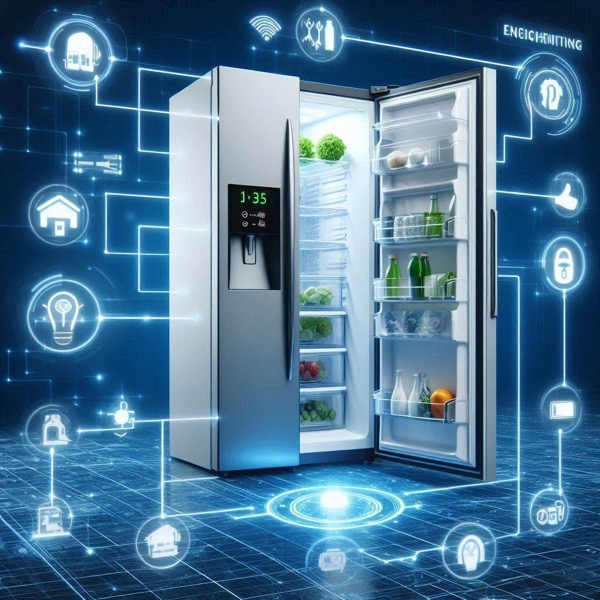
At CES this year we saw the first ever “smart” appliance using the new(ish) Matter standard, a fridge freezer from Bosch and if they’ve put the effort into adding Matter to that you can be almost certain that more will follow in time adopting the same standard.
If the rest of the industry follows this then that is a very good thing as it prevents a lot of customer confusion with standards. What we’d be hoping for here is that more brands follow suit and adopt one, cross-platform, a standard so that people aren’t bamboozled by all the different competing systems that we have today. We’re not saying Matter is or is not perfect but, it’s tons better than the current state of affairs.
And, given that Matter has been adopted by pretty much all the major players in the smart home industry, with some exceptions as it’s not all happy campers, it makes it easy for people who aren’t automation geeks to use the functionality that is on offer.
The problem is that the appliance industry moves at a glacial pace. In fact, glaciers probably move more quickly, and it is liable to be several years at best before we get a handle on what they’re all going to eventually do.
Then there’s the replacement cycle of the machines as well meaning that any change is unlikely to have an effect for many years, even if they all made the appliances smart today.
But, one standard for all would be a good thing; this has no real downside.
Remote Control
For years on here we’ve argued that remote control of appliances is not a good thing and, for a great many appliances that is true to this day (see comments above) but there are use cases for certain products.
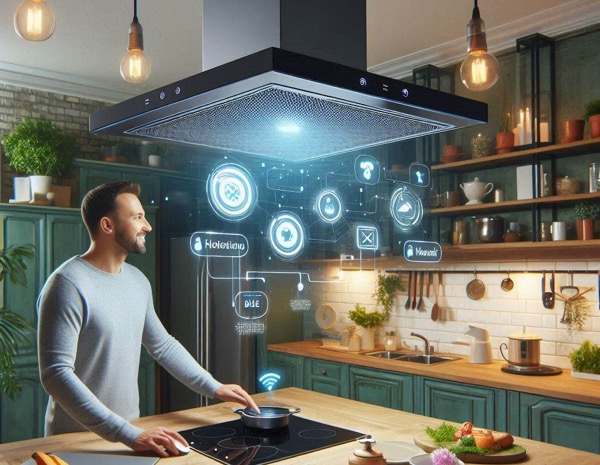 Take a cooker hood for example.
A hood being able to be operated remotely isn’t really a problem and, where you can feed the right information to it, you can automate a lot of tasks.
Some examples are such as, the hob below is turned on and draws power so that triggers an automation to kick the hood on, lights and fan or you could do that using heat, humidity, air sensors and so on to totally automate the hood coming on, off and even potentially the speed it needs to extract.
These sensors are cheap, in the grand scheme of things.
The brains needed to run a hood are, well not exactly going to vex NASA let’s say so even a low power $8 ESP board or something could potentially have more than enough power to run one along with sensors.
The problem so far has been that there’s no customer demand for products that are truly smart rather than what we have today, which is, essentially, dumb appliances with an app that can control them so long as you stay within one brand or run multiple apps. Hardly ideal or appealing to buyers.
And, on top of that, there’s been little effort we’ve seen put into explaining to buyers of the benefits that can be had from having appliances that are, truly smart, not just token gesture stuff.
The only way we’ll see this grow is if consumers demand smart products or, more likely, one maker gets the jump on the rest of them, comes up with compelling products with compelling features and they sell.
Power, Pollution & Saving Cash
One of the huge benefits you can glean from pukka smart appliances would be the ability to save power, move timings to more “green” energy being used in order to reduce pollution and move power-intensive tasks to that and cheaper tariff times.
Without getting too technical about it, as there’s a bunch of things that could be done here, let’s look at a dumb dishwasher.
For now you might have a delay timer for a few hours or, a programmable timer which you need to stab and silly little burns on the control panel to program, then pray you got it right. Then I hope you set it correctly and/or remembered to put it on, etc, for the cheap nighttime electricity rate.
A lot of people won’t bother at all, and likely just as many will give up or forget because it’s too hard, fiddly and, well… life.
On testing, our fairly old but efficient Asko-made dishwasher, it takes roughly 1.75kWh for a normal cycle.
On the likes of Octopus Go that’s 0.61p per wash normally or, between 00:30 and 04:00am the same cycle costs 0.12p, a 0.49p difference in cost which doesn’t sound like much to many people but assuming that dishwasher is used three times a week, that’s almost £60 a year saved by moving to off-peak use.
Of course mileage will vary depending on your use level, dishwasher and so on but the point will remain valid for any.
In five years, that’s the cost of many dishwashers covered in just one simple automation, don’t switch the dishwasher on until the rate is low.
This sort of stuff, in the world of home automation is almost the most basic of basic things to do in a smart home and yet, most appliances can’t even dream of it.
But think of the possibilities here, just in that alone, to move pyro cleaning cycles to only running on cheap rate or when the grid is not stressed. Hot taps filing their tanks when conditions are best, dryers running when it’s the best time to do so… there really are endless possibilities.
And think of the energy that could be saved, the stress you could take off the grid or the pollution that could be avoided by using products when the grid was running on renewable energies. The potential is massive.
However, it takes some joined-up thinking to ensure that the appliances are capable of being able to do this kind of stuff, and, frankly, for now, they’re just not. Not even remotely close.
Standby
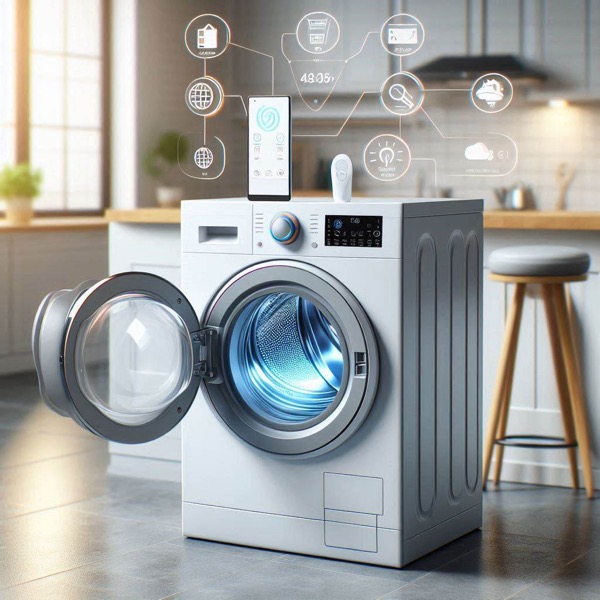 Another simple one for manufacturers et all to think about is, you can get simple smart plugs that retail for a few pounds and you can tell those to remotely shut down whatever they have connected. These have been around for decades and we have Zigbee, Z-Wave and Matter as well as others right now.
You can program simple automations such as, if there’s no draw above X wattage then shut it off. Simple.
And yet we still have dumb appliances with a power button (these often fail as well) you have to manually remember to switch off to shut the appliance down completely otherwise it’s drawing, usually 1-2W all day, every day, 24/7.
Now, that’s not a lot of power, sure, but a washing machine, dishwasher, and dryer in your home will likely be at least 5W 25/7 when not in use.
That’s about 3p per day, which a lot of people won’t be bothered about, £10 odds a year, but just think, if even a third of the 27 million homes in the UK do that, it’s a lot, an awful lot!
A simple switch internally that cuts the power totally till you touch the panel or whatever could save all that juice and money from being wasted and, it’s not rocket science to do that.
You have to ask why not and that can lead you down a number of rabbit holes but we suspect it’s just general laziness, a lack of innovation in the appliance industry and the laser focus on making them as cheap as possible because appliances have become largely commoditised.
We Love Smart Stuff
We’ve heard people say that we don’t like smart products and so on but that’s not true, we love them but they have to make sense and deliver benefits to users, as well as being simple to use and so far they are not, the’s our beef with them, not that they exist.
In fact, with the experience we have in smart home stuff spanning back 30 years, we know that appliances can be made to be very clever, deliver positive benefits and not cost a fortune. We can see this quite clearly and, with the correct implementation of smart features we reckon it could bring huge benefits, it just needs to be done right.
We do have reservations about running appliances unattended, but with suitable precautions in place, this isn’t so much of an issue; however, that also requires some smart home stuff in place.
So, we don’t have a negative view of smart homes or smart appliances at all what we’d point out is that to date, the so-called “smart appliances” ain’t really all that smart. Yet.
Smart however, starts with manufacturers thinking smart and until they do we fear that the appliance industry, in this regard, will be stuck in the past.
Updates
Whilst doing yet more research on this topic and, the new machines from Haier we came across this story well explained in this video:
{source}<iframe width=”560″ height=”315″ src=”https://www.youtube.com/embed/ayG7o74kdbc?si=fOMxo_ESi9qqLoL1″ title=”YouTube video player” frameborder=”0″ allow=”accelerometer; autoplay; clipboard-write; encrypted-media; gyroscope; picture-in-picture; web-share” referrerpolicy=”strict-origin-when-cross-origin” allowfullscreen></iframe>{/source}
This explains why there are good reasons for asking questions about manufacturer’s apps, how they work and so on.
Here’s another one that is an interesting take on this same topic:
{source}<iframe width=”560″ height=”315″ src=”https://www.youtube.com/embed/RcSnd3cyti0?si=DLStaqBzL9gvL_FZ” title=”YouTube video player” frameborder=”0″ allow=”accelerometer; autoplay; clipboard-write; encrypted-media; gyroscope; picture-in-picture; web-share” referrerpolicy=”strict-origin-when-cross-origin” allowfullscreen></iframe>{/source}
It should be noted that Haier seems to have u-turned on the initial response that they had and have allowed access now, which is commendable.
And another that brilliantly demonstrates some reasons to just stop already with this stuff:
{source}<iframe width=”560″ height=”315″ src=”https://www.youtube.com/embed/5M_hmwBBPnc?si=zcc1lHnEu1hE7cM8″ title=”YouTube video player” frameborder=”0″ allow=”accelerometer; autoplay; clipboard-write; encrypted-media; gyroscope; picture-in-picture; web-share” referrerpolicy=”strict-origin-when-cross-origin” allowfullscreen></iframe>{/source}