

The Gaurdian reports this morning that Dixons has been forced to cut costs in the face of falling sales and weakening margins as shoppers apper to have stopped spending on electrical goods.
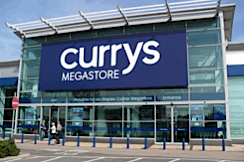
Plans to conserve cash were announced as Dixons (who also own and operate Currys and PC World) said UK sales had slumped by 10% in the 12 weeks up to the end of July. The company gave no update on trading since July, though John Browett the chief executive did say Dixons had emerged relatively unscathed from the looting and rioting in early August. While images in the media showed some stores apparently badly damaged and looted of stock, the Dixons boss said insurance payments would cover any damage.
Dixons said it had trimmed its capital spending budget by almost 40% to £100m. As recently as July the company had talked of spending up to £160m on store upgrades and other investments.
The business also faces a looming £160m bond repayment deadline next year. “We want to make it absolutely crystal clear to everybody that we have every prospect of repaying the bond which comes due at the end of next year,” Mr Browett said. This has given rise to speculation that, should Dixons not be able to generate the £160 million required that it could be forced to sell off its Scandanavian stores which are apparently the only area of the group that is performing well presently.
Shares in Dixons have lost 40% of their value in the last three months, delivering huge profits for short-sellers. Dixons is one of the companies most heavily targeted by short-sellers, in common with other mid-market retailers.
While Dixons’s management has won praise for its “renewal and transformation” strategy in the tough UK market, some analysts have suggested that the growing economic headwinds are starting to look almost impossible for the group to counter.
Philip Dorgan, a market analyst, said: “It is clear that Dixons is a binary situation with considerable risk, but we rate the shares a buy because, although we can understand the negative point of view, we believe that the improvement to its product, its stores and its operations that has been driven through over the last three years, gives it a reasonable chance of repaying its bonds next year.”