
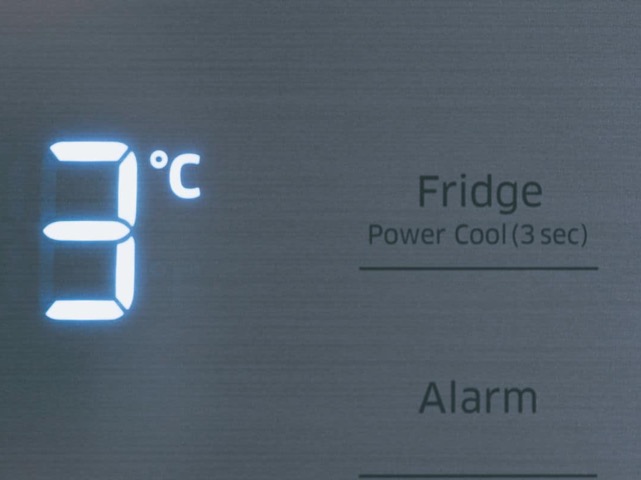
We caught an interesting article from Food Safety Network about research by Food Standards Scotland (FSS) that shows high fridge temperatures are putting people at increased risk of food-safety issues, some serious.
As we’ve noted in a number of articles on this site, a domestic fridge should operate between 0˚C and 5˚C, outside of that range and you have a problem with how long food will stay fresh as it should. But in this research, the Fridge Recording Over Set Time (FROST) trial, and kudos to whoever came up with that one, had an average temperature of greater than 5˚C.
It is reported that more than 350 homes across the country participated in trial, which was run between August 2023 and May 2024.
Data loggers, sent out by FSS, were placed in the participants’ fridges and tracked their temperature over a period of two weeks. The temperature inside the fridges was measured every 10 minutes for 10 days using two devices: one on the bottom shelf of each fridge and one on the top shelf.
Results showed that the average temperature overall was 5.17˚C, individual average fridge temperatures ranged from -0.39 to 10.94 ˚C). Individual readings varied from -11.9 to 19.1˚C.
Age of the fridge did not appear to impact temperature, but type did as American-style and free-standing fridges had significantly lower temperatures overall.
Interestingly, although people seemed to largely know about the importance of the temperature in the fridge, it didn’t seem to deter bad habits such as keeping meat in the wrong place (it should be as low as possible, where it’s colder) and packing their fridge too full, which can impede airflow. Worst though, was that some people turned the temperature up in a bid to save energy, obviously not realising or understanding the health risks that could pose.
Dr Louise Crozier, senior scientific adviser at FSS said: “There are an estimated 43,000 cases of foodborne illness annually and your fridge can be the first line of defense when keeping food safe. Fridges need to be kept at a temperature between 0 to 5 degrees C to slow the growth of bacteria and keep food fresher and safer for longer but, worryingly, a majority of fridges are not at the correct temperature,”.
“From this research, we know that there is additional work needed to increase consumer awareness on checking fridge temperatures using a fridge thermometer to ensure it is operating between 0 to 5 degrees C and to develop further advice on food placement and storage to minimize the risk of foodborne illness.
As we have said in numerous articles over the years, the need for care when storing food is important and can be potentially dangerous, as many foods can become unfit for consumption far faster than you might think if not kept at the correct temperature.